

22 OCT 2026
International Criminal Court and its officials win the Sakharov Prize
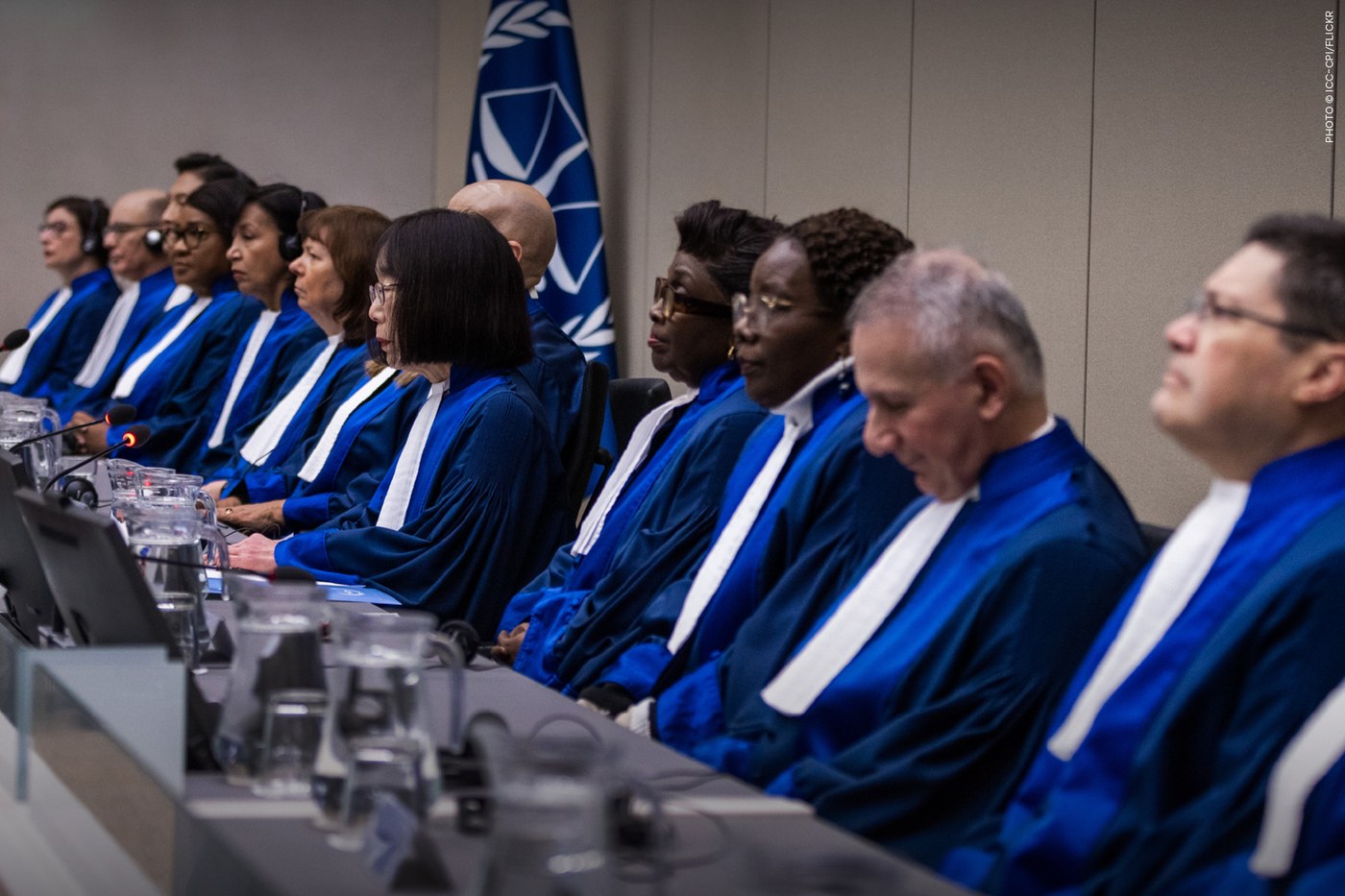
The 2026 Sakharov Prize for Freedom of Thought goes collectively to the International Criminal Court and its officials, announced by Parliament President Roberta Metsola in plenary.
The 2026 Sakharov Prize for Freedom of Thought is awarded collectively to the International Criminal Court (ICC) and its officials.
Roberta Metsola, President of the European Parliament, announced the 2026 laureate in plenary on Thursday and said: "The European Union is built on respect for multilateralism and international institutions. By awarding the Sakharov Prize to the International Criminal Court and its officials, the European Parliament recognises the Court's important work in upholding international law and justice."
The ICC investigates and, where appropriate, tries individuals accused of the gravest crimes of concern to the international community as a whole: genocide, war crimes, crimes against humanity and the crime of aggression. The Court plays a fundamental role in the global fight against impunity. By applying international criminal justice, it aims to hold those responsible to account and prevent such crimes from happening again. It is a court of last resort that complements national courts, governed by an international treaty called the Rome Statute, and is the world's first permanent international criminal court.
The prize highlights the ICC's work, including its investigations, prosecutions, trials and the issuing or authorising of arrest warrants.
The EU must defend the international mechanisms designed to protect justice and accountability
In Parliament's 2025 reports on the implementation of the common foreign and security policy and on human rights and democracy in the world, MEPs expressed deep concern at the growing threats and the various waves of sanctions imposed since 2025, in particular by the US, on the institution as well as on the Court's prosecutors, judges, staff and partners. MEPs consider these acts to be serious attacks on the international judicial system.
MEPs have repeatedly asked the European Commission to activate the so-called "EU Blocking Statute" to protect officials working at the ICC from extraterritorial attacks and to guarantee that the Court can continue its work in full independence. The Blocking Statute protects European operators, regardless of their size or sector, by cancelling within the EU the effects of any foreign legal decision based on the laws of countries outside the Union, and allows operators to seek compensation in court for damage suffered from the extraterritorial application of foreign laws.
In those reports, MEPs also welcomed the Union's continued financial support for the ICC at a particularly difficult time for international justice. All EU countries are parties to the Rome Statute and are therefore bound to implement the ICC's decisions. MEPs also stressed that the growing disregard for international law and the politicisation of debates on international judicial institutions are, in their view, an existential threat to the rules-based international order. The ICC President, accompanied by several judges, visited Parliament's committees in 2025 and 2026 to explain to MEPs the consequences of US sanctions on their professional duties and personal lives.
The Sakharov Prize for Freedom of Thought
Named after the physicist and political dissident Andrei Sakharov, the Sakharov Prize for Freedom of Thought was created in 1988. It is awarded every year by Parliament to individuals or organisations to recognise their work in one of the following areas: defending human rights and fundamental freedoms, in particular freedom of expression; defending minority rights; respect for international law; developing democracy and upholding the rule of law.
The 2026 award ceremony will take place in Strasbourg in December, during the European Parliament's plenary session.
Read the official release